 Blogging Heros
When a city dweller feels pain in his heart, he knows an ambulance will arrive no later than 20 minutes later. At remote industrial facilities – fields, ships, and industries – the victim can only rely on colleagues in the workshop and on the medical worker of the enterprise if any.
Due to bad weather conditions or the remoteness of the enterprise, the air ambulance or ambulance crew may not arrive as quickly as we would like, due to which the injured or sick employee risks dying. Medical and non-medical workers are taking courses in first aid and prehospital care to get basic cardiac life support certification to prevent this from happening. We tell you what courses there are, what they teach, and how the training system for medical and non-medical employees is arranged.
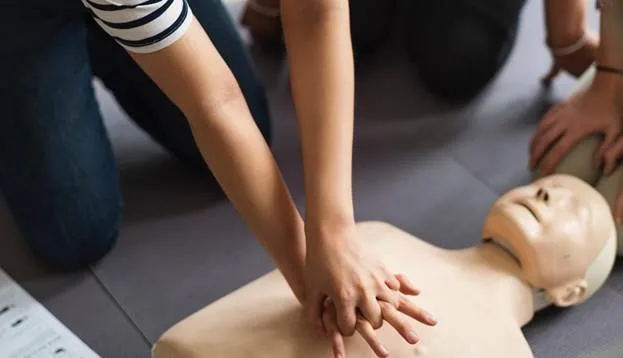
First aid
The course includes humanitarian emergencies, first aid techniques, and CPR skills.
The purpose of the study – to teach how to assist victims in crisis conditions:
- Lack of consciousness.
- Respiratory and circulatory arrest.
- Superficial bleeding.
- Foreign bodies in the upper respiratory tract.
- Injuries to various areas of the body.
- Burns, effects of exposure to high temperatures, thermal radiation.
- Frostbite and other effects of exposure to low temperatures
- Poisoning.
How to get a certificate: complete the life cpr training and pass the practical work.
What is taught:
- Practical first aid skills;
- Ensuring personal and group security in emergencies;
- Providing psychological support.
Basic Life Support provider, BLS/AED
Course on basic resuscitation and work with an AED designed for both medical and non-medical staff.
Course objective: learn how to perform basic cardiopulmonary resuscitation, safely operate an automated external defibrillator, and supply first aid.
How to get a certificate: complete the course and pass the practical work.
What is taught:
- How to call for help.
- Identify signs of heart function.
- Assist with obstruction of the airways – obstruction.
- Perform chest compressions and rescue breathing alone and as a team.
- It is safe to use a defibrillator.
- To give first aid.
BLS Instructor
Instructor course on basic resuscitation and work with an automatic external defibrillator.
Course objective: train instructors for the BLS Basic CPR and Automated External Defibrillation course. Such an employee can teach the enterprise employees to provide first aid.
How to get a certificate: complete the BLS provider course no more than a year ago and hand in practical work.
What is taught:
- Use a four-stage training method to teach medical and non-medical workers how to perform basic resuscitation and how to safely use a defibrillator;
- Evaluate students’ practical mastery.
- Advanced Life Support provider, ALS
Advanced resuscitation practice
Before the start of the course, participants receive a study guide and test tasks. The manual must be read, and the tests must be solved. So students will refresh their knowledge and prepare for the course.
Study objective: learn to perform advanced resuscitation, control the resuscitation team, interact with the patient’s relatives and make decisions in critical situations.
How to get a certificate: complete the BLS provider course no more than a year ago and hand in practical work.
What is taught:
- Manage the resuscitation team.
- Interact with the loved ones of the patient.
- Make decisions in emergencies.
- Identify patients at high risk of circulatory arrest.
- Solve problems that accompany a circulatory arrest.
- Perform advanced resuscitation using ECG monitoring.
The help of each person in an emergency can save a life. First aid training gives confidence that each person can help their child, relatives, friends, colleague, or even a stranger when needed.

The most common causes of medical evacuations are respiratory diseases, circulatory system diseases, and injuries. In these conditions, it is important to provide first aid to the victim as soon as possible to avoid disability and death. The courses we talked about prepare employees of enterprises, organizations, and remote facilities to assist in the most dangerous and frequent cases so that their colleagues will stay alive and return to normal life.