

Table of Contents
Most employers know they are supposed to have first aid provision in place. Fewer than you might expect know precisely what that means for their specific workplace, and fewer still have a training arrangement in place that genuinely satisfies both the legal requirement and the practical need to have people who can actually help in an emergency. If your business operates in the North East and you are trying to work out what your obligations are and where to find credible first aid training in the Newcastle area, the picture is clearer than it is often made to appear.
What the Law Actually Says
Under the Health and Safety (First-Aid) Regulations 1981, every UK employer has a legal duty to provide adequate and appropriate first aid equipment, facilities, and trained personnel for their workplace. The word adequate is doing important work in that sentence. The regulations are deliberately not prescriptive about exact numbers because what is adequate depends on the nature of the work, the size of the workforce, the physical layout of the premises, and the results of a first aid needs assessment that every employer is required to carry out.
What that means in practice is that a small office with twenty staff in a low-risk environment has different requirements from a construction site, a food manufacturing facility, or a school. The HSE’s guidance is clear that needs assessments should be genuine exercises rather than box-ticking, and that the level of provision should genuinely reflect the risks employees face.
The Two Main Qualification Levels Worth Understanding
For most workplaces in the Newcastle area, the choice comes down to two qualification levels. The Emergency First Aid at Work course, known as EFAW, is a one-day qualification that covers the essential responses to life-threatening emergencies. It is suitable for low-risk environments such as offices, retail settings, and call centres. The First Aid at Work qualification, FAW, is a three-day course that covers a considerably broader range of injuries and medical conditions and is required for higher-risk workplaces including light industry, construction, and food processing.
The HSE strongly recommends that all first aiders complete annual refresher training to keep skills current, and full requalification is required every three years. Certificate expiry dates are worth tracking carefully, because a lapsed certificate means the employee in question no longer meets the legal requirement, even if they completed the original training relatively recently.
Why the Quality of Training Matters Beyond Compliance
There is a version of first aid training that produces people who have a certificate and a vague recollection of what to do in an emergency. There is another version that produces people who are genuinely confident, practically capable, and who will actually step forward and help effectively when something happens on site.
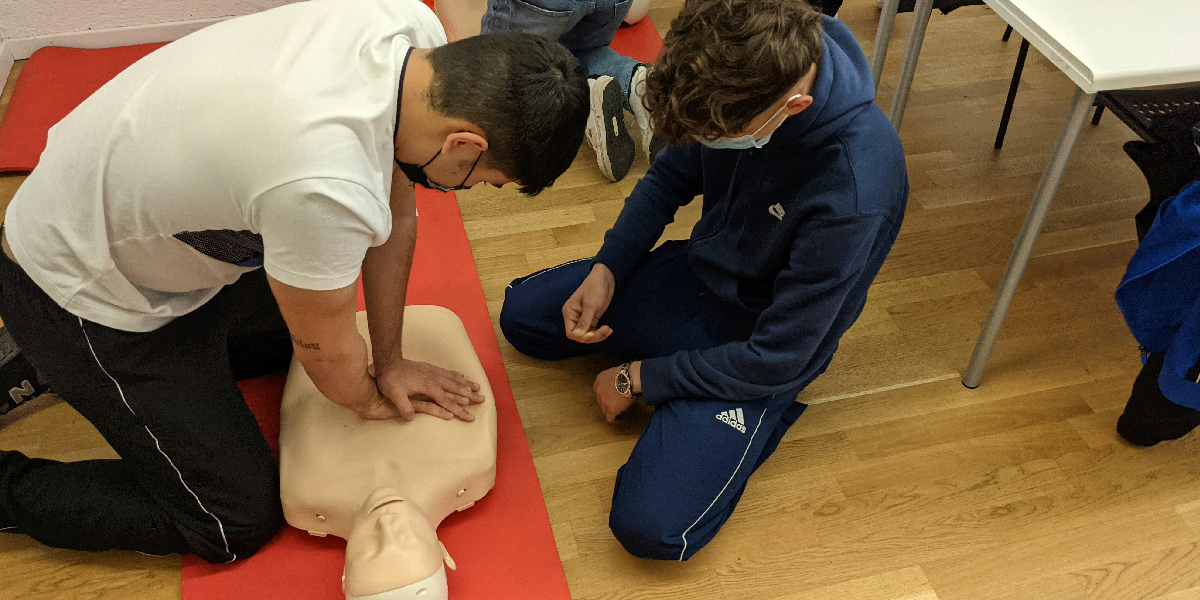
The difference is almost entirely in how the training is delivered. Hands-on, scenario-based training with a trainer who is genuinely skilled at facilitating practical exercises is what builds real confidence. A slide-heavy classroom session that treats the assessment as the primary goal does not. When you are evaluating first aid training providers in the Newcastle area, asking how much of the course is practical versus theoretical is one of the most revealing questions you can put to them.
Mental Health First Aid: The Growing Conversation
The HSE has updated its guidance in recent years to encourage employers to consider mental health first aid as part of their overall needs assessment. With workplace stress, anxiety, and related conditions accounting for an increasing proportion of absence and presenteeism across UK businesses, having trained individuals who can recognise signs of mental distress and provide appropriate initial support is becoming a genuine operational priority rather than simply a wellbeing aspiration.
For Newcastle-area businesses committed to their duty of care, mental health first aid training sits alongside physical first aid provision as a meaningful investment in workforce wellbeing.
Getting Practical About Coverage
One area that organisations frequently overlook is coverage continuity. Having one trained first aider works until that person is on holiday, off sick, or working different hours to the rest of the team. The HSE requires that adequate provision is maintained during all working hours, which for most businesses means training additional people to ensure continuous coverage across shifts, sites, and periods of absence.
Planning this properly from the outset, rather than discovering the gap when the one first aider is unavailable during an incident, is the kind of practical thinking that distinguishes genuinely compliant organisations from those that are technically compliant on paper only.
The Closing Thought
First aid training is not a formality to be satisfied with the minimum viable approach. It is the provision that determines whether your employees receive effective help in the minutes between something happening and professional emergency services arriving. Those minutes matter. The training that fills them needs to be good.
